

Designated paths/places
Feldberger Hütte protects ice-age shaped hills, beech forests, and wetlands. Rare plants like Martagon Lily thrive here, along with eagles, woodpeckers, and amphibians. Ancient burial mounds and a Slavic castle mark its long human history.
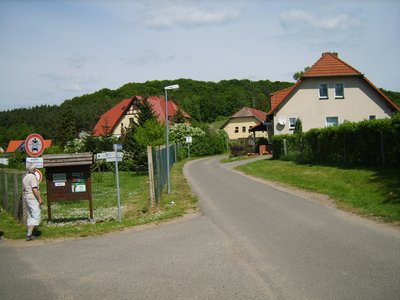
The Feldberger Hütte Nature Reserve preserves a diverse landscape shaped by the Ice Age. It features rolling hills with ancient beech forests and small wetlands formed in former kettle holes. This habitat provides a refuge for rare plant species such as the White Helleborine, Martagon Lily, Broad-leaved Marsh Orchid, and Bird's-nest Orchid, all thriving in this environment. The fauna is equally rich and noteworthy. Bird species like the Lesser Spotted Eagle, Common Crane, Black Woodpecker, and Middle Spotted Woodpecker inhabit the area. Various amphibian species, including the European Tree Frog, European Fire-bellied Toad, Common Spadefoot Toad, and both Smooth and Great Crested Newts, find ideal conditions in the wetlands. Beyond its natural significance, the area holds considerable cultural and historical importance. Numerous Stone Age burial mounds attest to a long human presence. Furthermore, over a thousand years ago, a Slavic castle stood on Schlossberg, with its traces still visible today. The southern part of the reserve is accessible via hiking trails, offering expansive views over the Feldberger Haussee from Reiherberg.
| Location | Germany - Mecklenburg-Vorpommern - Mecklenburgische Seenplatte |
| Area | 4.75km² |
| Year of foundation | 1957 |
| IUCN Category | IV |
| DtP ID | 7c297df5-5bfe-4a67-a27f-587c0155551f |
Designated paths/places
Verordnung über das Naturschutzgebiet 'Feldberger Hütte'
Aug. 16, 1994