Duvenstedter Brook

Nature Reserve

Description & Map

Summary

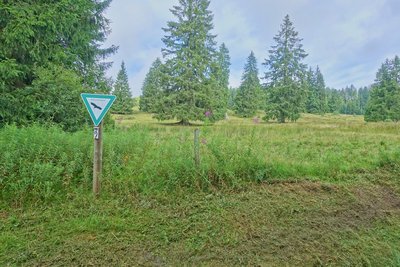
Covering around 780 hectares, Duvenstedter Brook is the city's second largest nature reserve. Together with the Wohldorf Forest, Klein-Hansdorfer Brook and Hunau Lowlands nature reserves, it forms a single landscape unit and is also the largest nature reserve complex in the Hamburg area.

Description

Thanks to the diverse habitats with vegetation typical of the location, the flora in the area is very rich, with around 400 species. Particularly noteworthy are the extremely nutrient-poor peat bogs with their trample-sensitive sphagnum moss cushions, cotton grass, white beak-sedge, cranberries, bog-rosemary and sundews. In addition to the moorland forests and unspoilt oak-hornbeam forests, the riparian forests slowly developing in the south along the Ammersbek river offer a varied sight. The largest mammals here are foxes, martens, polecats, weasels, badgers, roe deer, wild boar, fallow deer and red deer, as well as the invasive species raccoons, raccoon dogs and nutria. The Duvenstedt deer population (which includes the largest specimens in northern Germany) descends from deer that were released into the wild in the 1930s for hunting purposes. Thanks to improved protection measures, cranes have been able to resettle here since the early 1980s. In 2022, 31 breeding or territorial pairs were identified in Duvenstedter Brook and the surrounding area, raising at least 16 young birds. The area is closely monitored as part of crane conservation efforts. Since large areas of meadows and forests in the surrounding area have been drained, Duvenstedter Brook also serves as a refuge for numerous birds that inhabit wet habitats, such as common snipe, water rail, Eurasian woodcock and bluethroat.
General information
Responsible Organization

Wildlife

Fauna

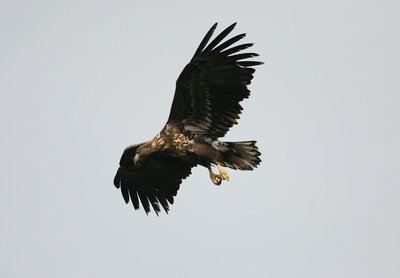
Seeadler

Habitat

Hoch- und Niedermoore

landscape

Habitat

Pfeifengraswiesen auf kalkreichem Boden, torfigen und tonig-schluffigen Böden (Molinion caeruleae)

landscape

Habitat

Noch renaturierungsfähige degradierte Hochmoore

landscape

Habitat

Moorwälder

landscape

Habitat

Dystrophe Seen und Teiche

owl

Fauna

Kranich

Rules

Entry behavior

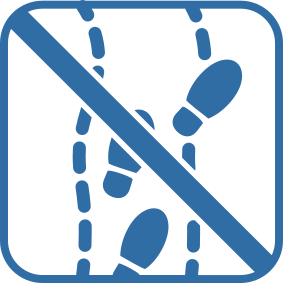
dtp_enteringoffthebeatenpath_forbidden_regular

Entering off the beaten path is forbidden

Cycling activities

dtp_cycling_allowed_regular

dtp_designatedpathsplaces_allowed_regular
Cycling is only allowed on

Designated paths/places

Horse riding activities

dtp_horseriding_allowed_regular

dtp_designatedpathsplaces_allowed_regular
Horse riding is only allowed on

Designated paths/places

Stay activities

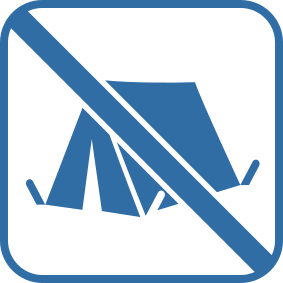
dtp_camping_forbidden_regular

Camping is forbidden

dtp_campingbivouac_forbidden_regular

Camping/Bivouac is forbidden

dtp_campingvehicletrailer_forbidden_regular

Camping (vehicle/trailer) is forbidden

Air activities

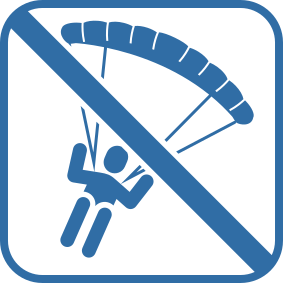
dtp_airsport_forbidden_regular

Air sport (starting and landing) is forbidden

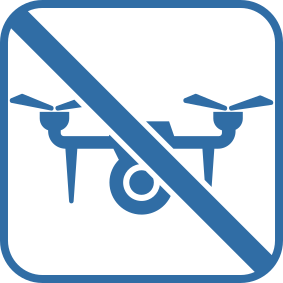
dtp_dronesmodelplanes_forbidden_regular

Drones/model planes is forbidden

General behavior

dtp_disposingofwaste_forbidden_regular

Disposing of waste is forbidden

dtp_goingtothetoilet_forbidden_regular

Going to the toilet is forbidden

dtp_fire_forbidden_regular

Fire is forbidden

dtp_dogs_forbidden_regular

Dogs is forbidden

dtp_cuttingorinjuringtrees_forbidden_regular

Cutting or injuring trees is forbidden

dtp_collectingplants_forbidden_regular

Collecting plants is forbidden

dtp_mushroomcollecting_forbidden_regular

Mushroom collecting is forbidden

dtp_collectingmineralsfossils_forbidden_regular

Collecting minerals/fossils is forbidden

dtp_fishing_forbidden_regular

Fishing is forbidden

dtp_swimming_forbidden_regular

Swimming is forbidden

dtp_bathinganimals_forbidden_regular

Bathing animals is forbidden

Report an error