Summary
The Ilands and the Hainesch are the main stage of an ancient rural cultural landscape, whose origins date back to the Bronze Age and which is now preserved as the Hainesch-Iland nature reserve. It is a charming area with pastures, meadows and fields, orchards and the wooded, steep-sided Saselbek valley, a tributary of the Alster.
Description
The area's flora is shaped by the geological formations of the stream valleys and the Hainesch and Iland plateaus. The latter serve as farmland and garden plots. In spring, the orchard blossom glows brightly, while the willows provide a lush green contrast to the meadow flowers and, in summer, the yellow cornfields. Hedges, hedgerows and patches of deciduous woodland are scattered throughout the landscape, and in some places there are imposing old solitary trees such as oaks and beeches, remnants of the area's former natural forest cover. The remnants of the former forest management practice known as coppicing are also striking. In this method, trees are regularly cut back to the stump, resulting in constant and ever-increasing growth of new shoots.
The vegetation on the slopes and in the Saselbek valley differs greatly from that of the coppice woodland. The steep slopes are covered in a sparse mixed deciduous forest where rare flowering plants such as spiked rampion and intermediate corydalis can be found. At the foot of the slopes in the Saselbek floodplain, a primeval forest of alder, ash and willow is slowly re-establishing itself. The valley floor is home to abundant stands of large bittercress. The broad-leaved marsh orchid grows in the marshy meadows leading to the mill pond, which is surrounded by dense reeds, particularly in the south-east.
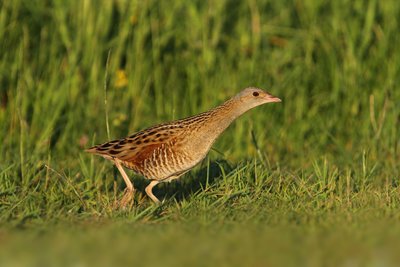
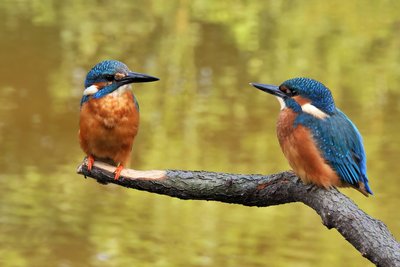
The floodplain forests, marshes and waterways provide a habitat for a variety of wildlife, including many waterbirds and amphibians. Ducks and rails are particularly abundant, and little grebes and grey wagtails can also be spotted. Grass, moor and water frogs, as well as smooth newts, are not uncommon in and around the waterways. The hillside woodlands provide breeding and feeding grounds for many birds. As a sit-and-wait predator, the kingfisher lies in wait for small fish in well-protected hunting spots beneath the overhanging trees along the Saselbek, Furtbek and Haingraben, as well as in the neighbouring Rodenbeker Quellental. The rivers and streams are rich in fish, providing the kingfisher with an abundant food source. Thanks to these optimal living conditions, this area is home to the largest population of these beautiful birds in Hamburg. However, prolonged cold winters pose a threat to this population. This can result in the loss of more than half of the population.