Summary
Lippeaue nature reserve protects the natural Lippe river and its floodplain habitats, including sand heaths, alluvial forests, and oxbows. It's vital for rare birds (e.g., Kingfisher), bats, amphibians, and badgers, serving as a crucial biotope corridor.
Description
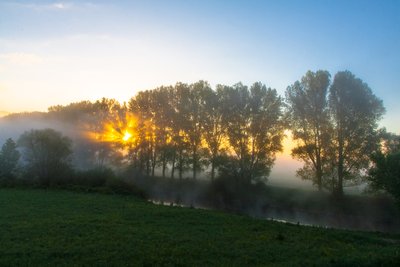
The Lippeaue nature reserve stretches along the Lippe river in Hünxe and Schermbeck, protecting its natural river structures, underwater vegetation, and characteristic riparian biotopes. This includes valuable habitats such as sand heaths on inland dunes, dry sand grasslands, juniper stands, tall oat-grass and great burnet meadows, moist tall herb fringes, and various natural forest types like acidophilous oak forests, Luzulo-Fagetum beech forests, oak-hornbeam forests, bog forests, and both soft and hard wood alluvial forests. Natural eutrophic lakes and oxbows also form part of this protected area. The Lippeaue is home to numerous endangered animal and plant species. Notable birds include the Common Teal, Nightingale, Kingfisher, Black Woodpecker, Woodlark, Red-backed Shrike, and Lapwing. Bat species such as the Brown Long-eared Bat, Serotine Bat, and Noctule find crucial refuges here. Additionally, amphibians like the Great Crested Newt and European Spadefoot Toad, as well as dragonflies and the badger, can be found. The area holds special significance as a regional and state-wide biotope corridor. Its rarity, the outstanding beauty of the richly structured floodplain landscape, and the geohistorical importance of its floodplain soils make it a valuable natural heritage.