Summary
The most impressive view of the nature reserve can be enjoyed from the Elbe riverbank between Blankenese and Wittenbergen. The island lies elongated in the river, surrounded by its main channel and the Hahnöfer-Nebenelbe tributary. A nature conservation warden lives on the island from time to time. He acts as a mediator between nature and people in the best sense of the word, for there is no public boat or ferry service to the island, and it can only be accessed with his help.
Description
The tides, storm surges and drift ice have created a richly structured mosaic of habitats in the Mühlenberger Loch. This provides living space and food for a wide variety of rare and endangered plant and animal species. In addition, the Mühlenberger Loch is characterised by biogenic oxygen production, which means that the area serves as a refuge for numerous aquatic creatures during summer oxygen depletion events in the Stromelbe. The freshwater mudflats of the Mühlenberger Loch are now among the largest of their kind in Germany. The Mühlenberger Loch EU Special Area of Conservation (SAC) is home to internationally significant resting sites for migratory species such as the northern shoveler, Eurasian teal, little gull, common gull, common shelduck and black-headed gull. Flocks of black terns and pintails of national importance use the area during their migration period. The abundance of food, the good oxygen supply and the sheltered location are the reasons for the abundance of fish in the Mühlenberger Loch. This area's significance lies primarily in its role in rearing juvenile fish, thanks to its combination of mudflats that are flooded at high tide, alongside shallow and deep-water areas. At times, fish densities in the Mühlenberger Loch are more than a hundred times higher than in other parts of the Lower Elbe in Hamburg. One remarkable plant species that thrives in the area's reed beds and floodplain forests is Oenanthe conioides. The mudflats of the FFH site serve as an important genetic reservoir for this Elbe endemic, as the seeds can survive there for decades.
The Elbe island of Neßsand forms the western boundary of the large shallow-water basin known as the ‘Mühlenberger Loch’ and is situated within the territory of three federal states. Entry to the nature reserve is prohibited; boats may only land at designated landing points and access the island only in the area of the sandy beach.
The island’s landscape is characterised by three types of vegetation: dry grassland, riparian woodland and the broad belts of reeds in the mudflats along the southern shore. The strong tidal currents of the Elbe’s main channel have formed a hard sandy mudflat on the northern shore. A long, steep sandy beach leads from there to an area of dry grassland lined with willow bushes.
Notable features of the riparian vegetation include the critically endangered species of hairgrass (Deschampsia wibeliana) and the equally rare Oenanthe conioides. Both species are found only in the freshwater mudflats of the Elbe.
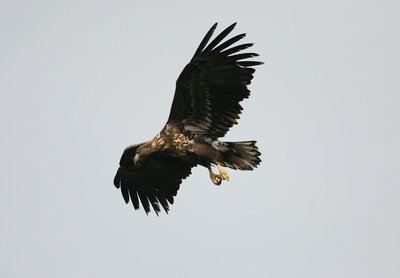
The island’s diverse vegetation zones and the influence of the tides provide an ideal habitat for many species. The dry grasslands and riparian forests are teeming with insects, beetles and spiders. Dragonflies flit about the shore areas, whilst ground-dwelling species of bees and wasps inhabit the sandy areas. Most impressive, however, is the birdlife: ornithologists have observed over 150 species, around 60 of which breed regularly in the nature reserve. Since 2007, these have included the white-tailed eagle and the beautifully coloured common shelduck, which has found an ideal refuge here. The grey heron, of which only a few breeding pairs remain in the Hamburg area, can frequently be seen fishing in the bays and mudflats of the southern shore during the warmer months. Cormorants hunt in large groups and large birds of prey come to feed on the fish they catch.
In spring and autumn, Neßsand is teeming with countless migratory birds resting here on their journey, including the beautiful northern shoveler and Eurasian teal. They are also among the birds that have become increasingly rare in urban areas. Occasionally, the odd curious harbour seal from the Wadden Sea turns up to bask on the island’s shores during its journey, and porpoises have also been spotted.