Summary
In the north-eastern outskirts of Hamburg, on the border with Schleswig-Holstein, visitors can enjoy a variety of impressive hills. A vast open landscape gives the area a steppe-like character and is surrounded by mature trees. The area is also criss-crossed by the Stellmoorer Quellfluss and the Wandse, and former coppice woodlands stand in their low-lying areas.
Description
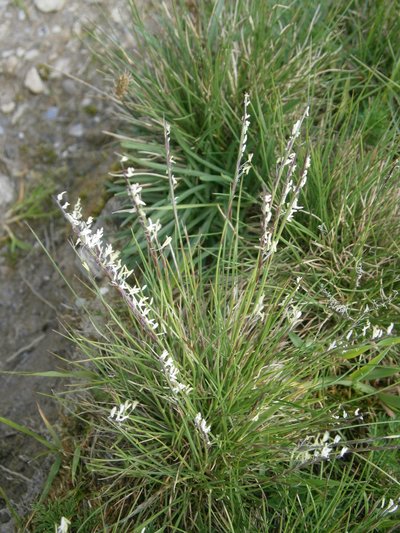
Rare, nutrient-poor grasslands that depend on dry, well-aerated soils have formed on the undulating, open landscape created by the boulder deposits (drumlin fields) left behind during the penultimate Ice Age. This area is home to plants such as St John's wort, early hair-grass and various species of berry and blackthorn. For forty years (used as a military training area), the land on the Höltigbaum was hardly ever fertilised, which has had a decisive influence on the vegetation there. Heavy tanks have repeatedly destroyed the vegetation cover, thereby allowing short-lived pioneer plants such as silver hairgrass and centaury to establish themselves here. The effects are still visible today: dry, nutrient-poor grasslands grow on sandy hilltops and sunny slopes.
The plants here are true ‘masters of survival’. They have adapted to the nutrient-poor soil and the occasional desert-like conditions, whilst at the same time providing a habitat and food source for a number of specialised insects. The damp lowlands are home to reeds, rushes, sedges, tall herbs and marshes. The broad-leaved marsh orchid can also be admired in some places. The floodplain forests of the Stellmoorer Quellfluss and the Wandse are dominated by black alders, bird cherries, birches, sedges, ferns and mosses.
The coppice forests, with their multi-stemmed oak trees, were created through an ancient form of forest management. Under this system, young oak trees were cut down every ten to twenty years and used to produce firewood and tanbark. This restricted their growth, allowing wild apple and wild pear trees, which are otherwise very rare, were able to grow unhindered. The hedgerows, too, served as boundaries between agricultural plots and comprised oaks, ash trees, wild apple trees, blackthorns and hawthorns, as well as ferns and herbs.
In the 1930s, the Wandse and the Stellmoorer Quellfluss were straightened and many wetlands were drained in order to create more grassland suitable for agriculture. As a result, many animals and plants lost their natural habitat. It was only after the streams were renaturalised in the 1980s that moisture-loving amphibians, reptiles, insects and birds were able to re-establish themselves in the riparian zones and on the wet meadows in the lowlands. Today, the area is home to species such as the common toad, common spadefoot, moor frog and grass frog, various newts, as well as the common lizard and sand lizard. Dragonflies and birds are also well represented here, including species on the Red List (e.g. the Irish damselfly). Today, birds such as the lapwing, common snipe, grey heron and white stork now forage on the wet meadows created by the restoration of the streams.
The Höltigbaum's semi-open landscape in particular provides a habitat for many endangered bird species. It is one of the red-backed shrike’s preferred breeding grounds, as its grassland, interspersed with black- and hawthorn and wild rose hedges, offers the bird ample shelter and food. The skylark also depends on this semi-open grassland. It is very much tied to life on the ground and never flies up into trees or buildings. It also builds its nest in a hollow in the ground, where it is, unfortunately, particularly at risk from unleashed dogs and people walking off the paths.