
Designated paths/places from 01. January until 31. December
Das Betreten ist nur auf ausgewiesenen Wegen und Beobachtungsständen erlaubt.
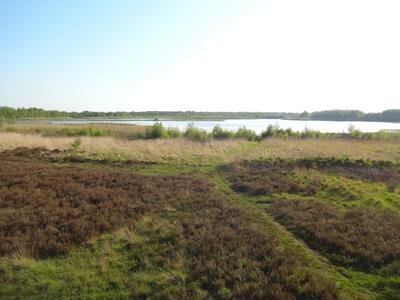
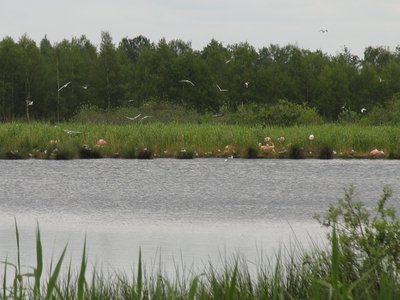
Zwillbrocker Venn protects a diverse landscape of moors, heaths, forests, and water bodies. It's a vital habitat for the great crested newt and numerous rare bird species like cranes, greater flamingos, and Mediterranean gulls.
The Zwillbrocker Venn nature reserve presents a fascinating landscape of forests, moors, wet meadows, and water bodies right on the border with the Netherlands. It preserves and promotes the favorable conservation status of rare natural habitats and numerous animal and plant species. Here, you will find dystrophic lakes and ponds, wet and dry heaths, as well as various moor types such as raised bogs, transition mires, quaking bogs, and peat bog depressions. Old acidophilous oak woods and bog woodlands also shape the area. The reserve is a crucial habitat for the great crested newt. Birdwatchers can observe a variety of species, including cranes, greater flamingos, Mediterranean gulls, wood larks, bluethroats, ruffs, European golden plovers, and wood sandpipers. Furthermore, regularly occurring migratory bird species like shovelers, teals, garganeys, gadwalls, meadow pipits, common snipes, black-tailed godwits, Eurasian curlews, black-necked grebes, water rails, stonechats, little grebes, common redshanks, and northern lapwings are at home here, contributing to the special significance of Zwillbrocker Venn within the Natura 2000 network.
| Location | Germany - North Rhine-Westphalia - Borken |
| Area | 1.84km² |
| Year of foundation | 1938 |
| IUCN Category | IV |
| DtP ID | 5070509a-9c78-4150-94fc-f1e6a2973bb5 |
| Name and division |
Nordrhein-Westfalen-Stiftung
Naturschutz, Heimat- und Kulturpflege |
| Website | https://www.nrw-stiftung.de |
| Address |
Show address Hide address
Roßstraße 133
40476 Düsseldorf Germany |
Designated paths/places from 01. January until 31. December
Das Betreten ist nur auf ausgewiesenen Wegen und Beobachtungsständen erlaubt.
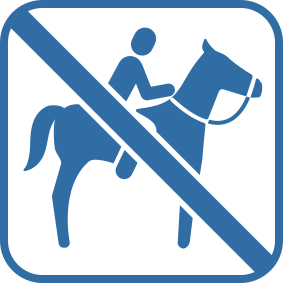
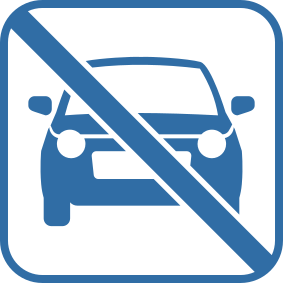
Das Fahren mit Kraftfahrzeugen ist verboten.
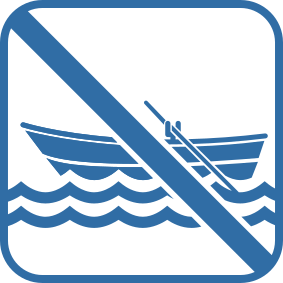
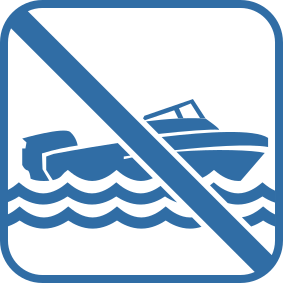





Das Beschädigen, Ausreißen, Ausgraben oder Abtrennen von Teilen von Bäumen, Sträuchern und sonstigen Pflanzen ist verboten.

Das Fangen, Töten, mutwillige Beunruhigen sowie das Fortnehmen oder Beschädigen von Puppen, Larven, Eiern, Nestern oder sonstigen Brut- und Wohnstätten wildlebender Tiere ist verboten. Das Füttern von Tieren kann als Beunruhigung interpretiert werden.

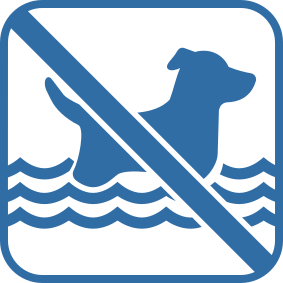

Das mutwillige Beunruhigen wildlebender Tiere ist verboten, was auch für aufdringliches Fotografieren/Filmen gilt.

Das mutwillige Beunruhigen wildlebender Tiere ist verboten, was auch für die Erzeugung von Lärm gilt.